
Mumbai International Airport Ltd (MIAL), controlled by the Adani group, plans to unilaterally shift international flights to 14 destinations from Mumbai airport to Navi Mumbai airport if airlines do not voluntarily submit relocation plans. This move is part of MIAL's strategy to redevelop Mumbai airport's Terminal 1 due to safety concerns, aiming to temporarily shift 5 million passengers annually.

Mumbai International Airport Ltd (MIAL) has informed airlines that it will not shift any international flights from Mumbai airport to Navi Mumbai airport until the end of the winter season in March next year, following discussions with the Airline Operators Committee.
Adani Group-controlled Mumbai International Airport Ltd (MIAL) has reiterated that airlines must decide whether to shift flights to Navi Mumbai, temporarily suspend operations at Mumbai airport, or pursue other alternatives from the summer 2027 schedule due to Terminal 1's redevelopment.

IndiGo and Air India Group will progressively shift flights from Mumbai's Chhatrapati Shivaji Maharaj International Airport (CSMIA) to the newly built Navi Mumbai International Airport (NMIA) starting from December. This phased transition, expected to complete by the 2027 summer aviation season, aims to ease capacity constraints at CSMIA, facilitate its Terminal 1 redevelopment, and establish a dual-airport system for Mumbai, enhancing connectivity and future growth.

'Airport redevelopment plans should not, in themselves, result in the withdrawal, denial or reallocation of historical slots.'
The Adani Group-owned Navi Mumbai International Airport is slated to commence international passenger and freighter operations from July 15. This marks a significant expansion for the airport, which began domestic services last December. Air India Express and IndiGo are expected to operate international flights, with customs readiness reviews already completed. The airport anticipates a substantial increase in daily passenger footfall and air traffic movements by the year-end.

The process agreed on Tuesday will require MIAL to first build stakeholder agreement on the transition before taking the plan through the regulatory approval process.

Navi Mumbai International Airport (NMIA) has officially commenced its international flight operations with an Air India Express service to Abu Dhabi, marking a significant boost in connectivity for the Mumbai Metropolitan Region and establishing a new global gateway.
IndiGo will have 74 of its 224 weekly international departures affected while Air India will relocate 33 of its 100 departures.

The Civil Aviation Ministry has requested Adani Airports to postpone the partial relocation of international flights from Mumbai to Navi Mumbai airport, a move initially proposed due to renovation of Mumbai's Terminal 1 and opposed by airlines. Discussions are underway to formulate a revised transition plan.

The Airports Economic Regulatory Authority (AERA) has waived landing charges for international flights at the Navi Mumbai International Airport for one year, with phased discounts for subsequent years. This move aims to incentivise airlines to establish new international routes from the airport, modifying previous criteria that linked waivers to the broader Mumbai Metropolitan Region.

The Maharashtra Cabinet Infrastructure Committee has approved a 35-km Metro project to connect the Mumbai and Navi Mumbai international airports at a cost of over Rs 22,000 crore.

Maharashtra Chief Minister Devendra Fadnavis has proposed a phased redevelopment of Mumbai International Airport's Terminal 1 (T1). The plan aims to keep the existing facility operational until its replacement is ready, preventing flight disruptions. This alternative sequence involves developing a new terminal section before demolishing the old one, addressing structural concerns and increasing passenger capacity from 15 MPPA to 20 MPPA by March 2029.
Mumbai International Airport is set to reduce 265 weekly international flights from October 25 to facilitate the redevelopment of Terminal 1. This move, impacting 46 airlines including IndiGo and Air India, has raised concerns among carriers and global aviation bodies like IATA, who advocate for collaborative planning over mandated relocations.

Prime Minister Narendra Modi inaugurated Phase 1 of the 19,650 crore (196.50 billion) Navi Mumbai International Airport, marking a major milestone in India's aviation infrastructure. Conceived as the country's largest greenfield airport project, the facility has been developed under the public-private partnership model and will function as the second international airport for the Mumbai Metropolitan Region, easing pressure on the congested Chhatrapati Shivaji Maharaj International Airport. The new airport is expected to significantly improve air connectivity for Mumbai and its adjoining regions, catalyse economic growth in Navi Mumbai and Raigad districts, and serve as a key hub for passenger and cargo traffic in western India.

Nearly three decades after the ambitious project was first conceived to decongest the existing airport in the financial capital, the greenfield Navi Mumbai International Airport became a reality on Thursday as an IndiGo Airbus A320 from Bengaluru landed on the tarmac at 8 am amid a traditional water cannon salute.
Mumbai's Chhatrapati Shivaji Maharaj International Airport (CSMIA) is undertaking a significant redevelopment of its ageing Terminal 1, commissioned in 1964, due to structural and safety concerns. This project aims to increase passenger-handling capacity and upgrade infrastructure. To facilitate construction, 11 international airlines will temporarily shift some services to the new Navi Mumbai International Airport (NMIA) from March 2027, while 39 major international carriers will continue operating from CSMIA's Terminal 2, ensuring minimal disruption to most international passenger traffic. The redeveloped Terminal 1 is targeted to be operational by March 2029.
Adani Group-operated Mumbai International Airport (MIAL) is set to begin demolishing a section of its nearly 80-year-old Terminal 1 from January 15, 2027, as part of a major redevelopment plan. This initiative involves redistributing air traffic from T1 to Terminal 2 and the Navi Mumbai International Airport, with significant shifts planned for international and domestic flights starting October 1 and October 25, respectively.
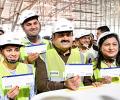
The entire construction of the Navi Mumbai airport project is expected to be completed in five phases.
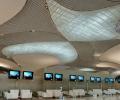
Prime Minister Narendra Modi will inaugurate phase one of the Navi Mumbai International Airport and the final phase of Mumbai Metro Line-3 during his two-day Maharashtra visit. He will also launch Mumbai One, India's first integrated common mobility app.

The airport, being developed by the Adani Group, is expected to start commercial operations early next year.
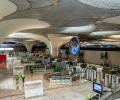
Prime Minister Narendra Modi inaugurates the Navi Mumbai International Airport and a portion of the Mumbai Metro Line, marking significant improvements to transportation infrastructure in Mumbai.
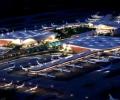
Earlier in the day, an IndiGo A320 passenger aircraft landed successfully at 1.32 pm at runway 08/26 of the under-construction Navi Mumbai International Airport, paving the way for the Navi Mumbai International Airport Ltd (NMIAL) to seek an aerodrome licence from the aviation safety regulator Directorate General of Civil Aviation (DGCA) to start commercial flight services.

Prime Minister Narendra Modi inaugurated the first phase of the Navi Mumbai International Airport and dedicated the Mumbai Metro Line 3 to the nation, marking significant infrastructure developments in the Mumbai Metropolitan Region.
The long-awaited Navi Mumbai International Airport is set to relieve traffic at Mumbai's main airport and offer new travel options for the region.
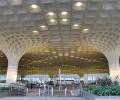
The Directorate of Revenue Intelligence (DRI) has dismantled a gold smuggling syndicate at Mumbai's international airport, seizing 2.6 kg of gold in wax form, valued at approximately Rs 4.20 crore.
It is the first airport in the country to have multi-modal connectivity. This includes a linkage to the project via road, rail, and a metro system.

The Cabinet on Thursday approved construction of the second international airport at Navi Mumbai in Maharashtra.

Navi Mumbai airport's construction is facing delays, and is likely to commence commercial operations in 2025 instead of 2024, aviation consultancy firm CAPA has said in a report. When asked about this matter, the Adani Group told Business Standard that the Navi Mumbai airport project is "being executed as per scheduled implementation plan and will be operational by the original target date of December, 2024, without any delay". Navi Mumbai International Airport Limited (NMIAL), responsible for both the construction and operation of the airport, is a subsidiary of the Adani Group.

The Navi Mumbai international airport will boast three interconnected multi-level terminals with a lotus-inspired design, according to the master plan prepared by its outgoing developer. The GVK group, which completed 15 years of airport business, shared the first look of the Navi Mumbai airport. The group in 2018 had commissioned British firm Zaha Hadid Architects to design the main terminal and air traffic control tower. The master plan of the airport was approved by the City and Industrial Development Corporation (CIDCO) in 2019.
German firm Fraport India on Monday said it is in advanced discussions with some entities to jointly bid for the proposed Navi Mumbai airport.

The Environment and Civil Aviation ministries had been at loggerheads over the airport project.
The Ambani brothers, Tata group, GVK Group, GMR Group and Larsen & Toubro are among the top players bidding for the greenfield Navi Mumbai airport, the second airport project in Mumbai.

Navi Mumbai airport can become a hospitality hub, say hoteliers.

The understanding was reached during a meeting between Environment Minister Jairam Ramesh and Civil Aviation Minister Praful Patel in New Delhi to decide the fate of the airport which has been embroiled in 'green' wrangle.
The new company would be named Videocon Aviation Limited and the parent firm would make an investment of Rs 100 crore (Rs 1 billion) in the Special Purpose Vehicle and rest of the funds would be generated from FIIs, public and foreign collaborators. Videocon had made a bid for the Delhi Airport as well, but it was rejected by the government as there was no airport operator in the consortium.

The deadline for the commercial launch of the Navi Mumbai airport is set at 2021-end

The Airline Operators Committee has questioned the basis for shifting 33 per cent of international services to Navi Mumbai International Airport.

The airline plans to scale up its operations at NMIA significantly, from 36 air traffic movements (ATMs) daily on the opening day to 79 daily departures (158 ATMs), including 14 international departures by November this year.

The Navi Mumbai International Airport will be inaugurated on October 8, Adani Group chairman Gautam Adani said on Wednesday. The airport, which received the aerodrome licence from aviation safety regulator DGCA on Tuesday, is being developed in multiple phases.
